

Posted in Burnout, Covid, Hiatus, Learning Woes

Burnout or When Burning the Candle at Both Ends goes Wrong…

https://www.pexels.com/@eye4Dtail

Burnout: Burnout is a state of emotional, mental, and often physical exhaustion brought on by prolonged or repeated stress.  -Psychology Today

So, like I said in my last post I accomplished a great deal next year, but I think overall  it cost me alot as well.  I was able to pass Cloud+, Pentest+, CYSA+, and Splunk Certified User.  I also completed my Master’s degree.  I Competed in 2 National Cyber League CTFs and lead one of my school’s teams each time.  I also had to deal with the demands at work that kind of intensified with co-workers coming and going. 

By November I really just felt tired.

I basically didn’t want to do anything at least career related and in some ways not even big life stuff.   So, because I know myself well enough I took December 2021-January 2022 off. I still worked, but I wasn’t like actively trying to like improve myself.

I didn’t want a little burnout to end up like:

https://www.pexels.com/@Adonyi-foto

Or Worse:

https://www.pexels.com/@Diego-Sanchez-44059283

I didn’t try to study for any new certs, didn’t try to find any challenging ctfs, didn’t take anymore classes, nothing. I just sailed for a bit instead of striving and trying to compensate for starting later than others or being newer to the field. I stopped telling myself I didn’t belong in the conversation or at the table because I just got here and needed to prove something and I just relaxed.

It’s hard to just relax and it’s super hard to silence the voices in your head telling you that you’re not as good or even the voices outside that say the same, but it’s important that we don’t let them overwhelm you and especially don’t let them talk over the voices of confidence.
Posted in Informational, Topic

Phishing

Spam, Scams, and Being Targeted…

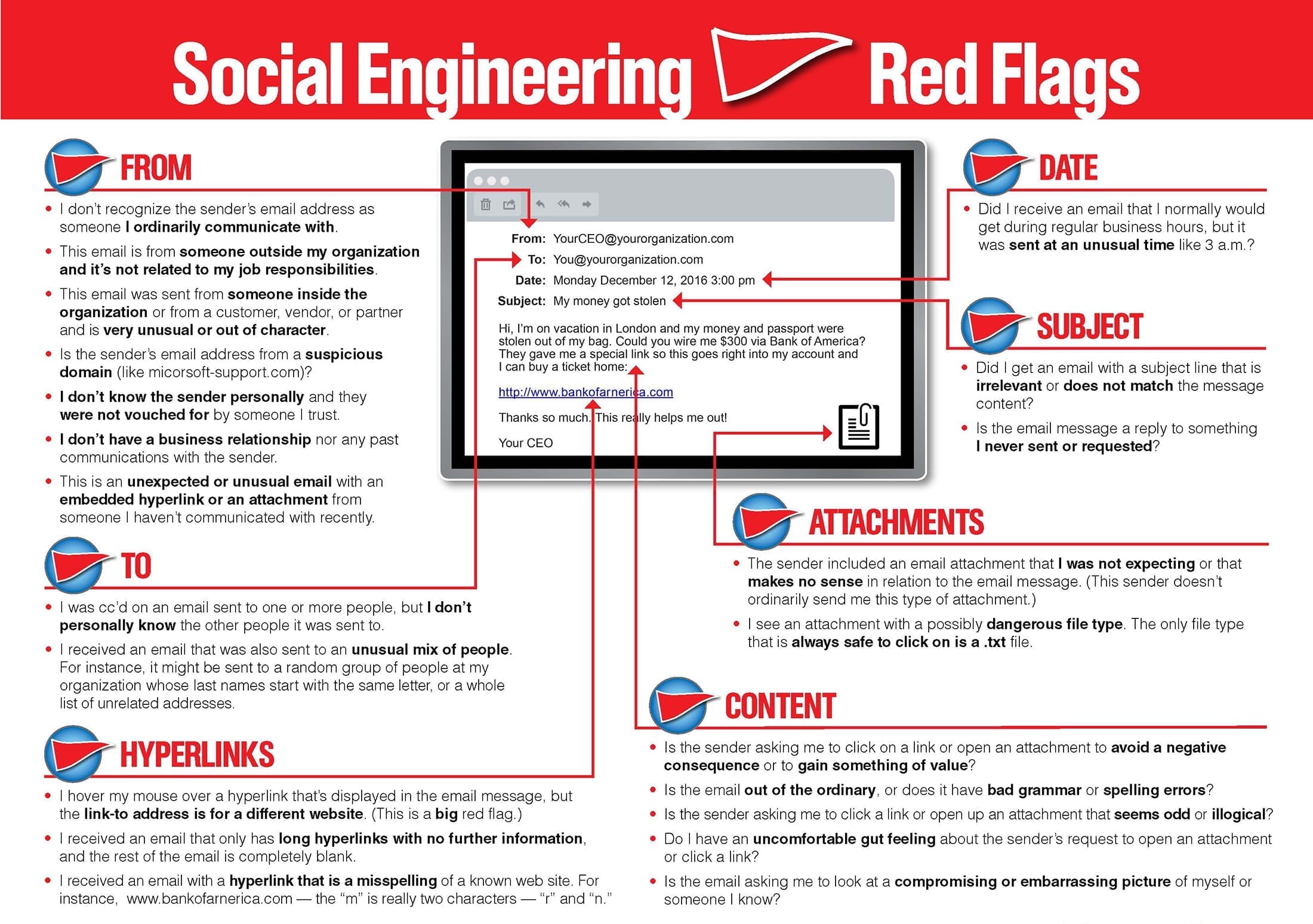
Regardless of whether you are the CEO of a Fortune 500 or a blue-collar worker with hundreds in the bank there is a price on your personal identifiable information (PII). The cost of your information can range from the amount of money you currently have in an account, the amount of credit extended on a card, or the usability of your credentials in escalated attacks. That’s not fear-mongering, it’s a fact. Information is a commodity and either yours and/or the information you hold is worth something. Thankfully, phishing emails can be easily combated with just an increase in situational awareness and following simple rules for emails.

  • This means looking at the sender of emails; including matching the sender name and the sender’s email address.
  • Being wary of all links and attachments. If the attachment is from a stranger or not expected from the sender err on the side of caution and don’t download it without verifying the sender (not through email).
  • Assume links are suspicious. This is just the easiest way to avoid misdirection. If you need to check something out for an account don’t use the email links instead go directly to the site via the browser by typing it in.
References
More Examples of PHishing Emails
Glossary
  1. Phishing – crafted, usually mass-sent emails used to try and garner information from the targets. These are usually not a well crafted, can be automated. Also a broad term that encompasses: spear-phishing and whaling.
  2. Spear-phishing- An email attack which is targeted to certain people, persons, or groups. These emails will be more well crafted and will try to use public available information to craft the message.
  3. Whaling-An even more targeted attack than spear-phishing which casts an even smaller “net” targeting CEOs, COOS, and other upper management accounts.
  4. Social Engineering- Broad term for attacking the “human” element of organizations. This type of attack uses human nature to try and get information or gain access. Phishing falls under social engineering as an attack type.
  5. Situational Awareness- Practicing calm in the moment in order to analyze environmentally what is occurring.
  6. Spoof[ing]- Imitation; pretending or portraying to be an entity in which they are not.